



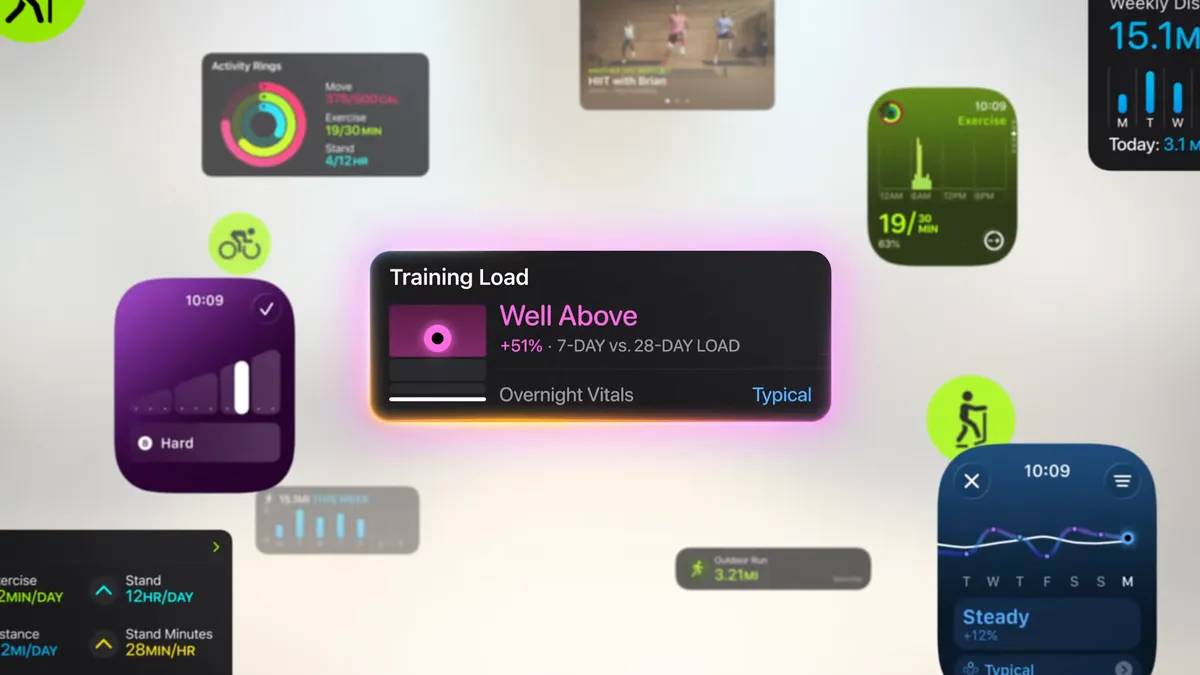
A major development unfolded in Apple’s digital health ecosystem as the company introduced Spanish language support for its AI-powered Workout Buddy feature within Fitness+ at WWDC 2026. The update reflects Apple’s incremental expansion of its AI fitness ecosystem, while also drawing attention to growing expectations for deeper innovation in personalized health and wellness technologies across global markets.
Apple’s latest Fitness+ update brings Spanish language support to its AI-driven Workout Buddy feature, which provides real-time coaching and motivational guidance during workouts. The enhancement is designed to make the service more accessible to a broader global user base, particularly in Spanish-speaking regions.
The update is part of Apple’s broader push to integrate artificial intelligence into health and fitness services, leveraging user data to deliver personalized coaching experiences. However, industry commentary suggests that while the language expansion improves accessibility, the underlying feature set remains largely unchanged.
Key stakeholders include Apple Fitness+ users, global health tech consumers, fitness content creators, and Apple’s services division, which continues to expand subscription-based offerings within its ecosystem.
The rollout aligns with WWDC 2026 announcements emphasizing incremental improvements across Apple’s AI-powered services rather than radical feature overhauls in fitness applications.
The development aligns with a broader industry trend where digital health and fitness platforms are increasingly integrating AI-driven personalization tools to enhance user engagement and retention. Subscription-based fitness services have become a competitive segment for major technology companies seeking recurring revenue streams.
Apple entered the fitness and wellness space through Fitness+ as part of its services expansion strategy, aiming to integrate hardware (Apple Watch, iPhone) with AI-driven coaching and health insights. Over time, the platform has focused on accessibility and ecosystem integration rather than aggressive feature diversification.
Globally, competitors in the digital fitness market, including platforms like Peloton, Google Fit integrations, and other AI-based wellness apps, are also investing in personalized coaching and multilingual support to expand user reach.
Historically, Apple’s health strategy has prioritized incremental improvements in user experience, privacy-focused data handling, and seamless integration across devices rather than rapid feature expansion.
Health technology analysts suggest that adding language support to AI fitness coaching tools is a logical step toward global scalability, particularly in markets with high mobile fitness adoption. However, they also note that competitive differentiation increasingly depends on deeper personalization and advanced biometric integration.
Industry observers argue that while Apple’s Workout Buddy feature enhances user engagement, it risks falling behind more aggressive AI fitness platforms that are introducing adaptive training programs, predictive health insights, and real-time physiological feedback.
Experts also highlight that Apple’s strength lies in ecosystem integration, where Fitness+ works in tandem with Apple Watch and iPhone health data, offering a more unified user experience compared to fragmented competitors.
However, some analysts caution that incremental updates may not be sufficient to sustain long-term subscriber growth unless paired with more advanced AI-driven health features.
For businesses, the update reinforces the importance of localization and accessibility in scaling digital health services globally. Fitness platforms may increasingly prioritize multilingual AI coaching to expand their addressable markets.
For investors, the move reflects Apple’s continued focus on services revenue growth through Fitness+ and related subscription offerings. While incremental, such updates contribute to ecosystem stickiness and recurring revenue stability.
For policymakers, the expansion of AI-driven health coaching raises questions around health data privacy, algorithmic transparency, and the use of personal biometric information in AI systems.
Analysts suggest that competition in digital wellness will increasingly depend on the depth of AI personalization rather than surface-level feature expansion. Apple is expected to continue refining Fitness+ and Workout Buddy with additional language support and deeper AI integration in future updates. Decision-makers should monitor whether Apple introduces more advanced biometric-driven coaching or expanded health analytics.
While the current update improves accessibility, the broader competitive challenge lies in delivering more intelligent and adaptive fitness experiences. The next phase will determine whether Apple evolves Fitness+ into a fully AI-driven health platform or maintains its incremental enhancement strategy.
Source: CNET
Date: June 2026


