
Anthropic Mythos Sparks New AI Governance Debate

Anthropic’s Mythos model represents a new class of advanced AI systems designed to push reasoning, autonomy, and contextual understanding beyond current benchmarks.

April 21, 2026
|
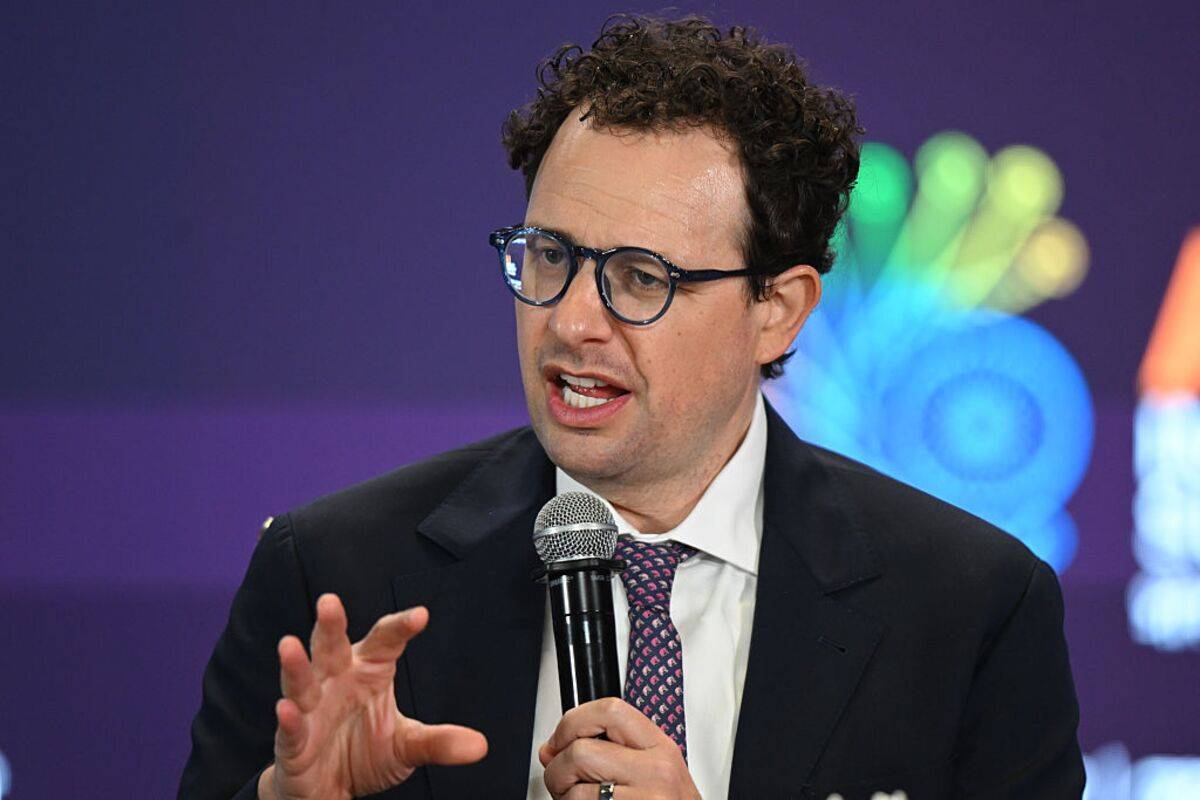
Image Source: Bloomberg

A major development in artificial intelligence has emerged as Anthropic addresses key questions surrounding its new Mythos model, signalling a strategic shift in advanced AI capabilities and risk frameworks. The move carries significant implications for global tech competition, enterprise adoption, and regulatory oversight as frontier models grow more powerful.

Anthropic’s Mythos model represents a new class of advanced AI systems designed to push reasoning, autonomy, and contextual understanding beyond current benchmarks. The company clarified core concerns around safety, scalability, and deployment timelines, emphasizing controlled rollouts and alignment-focused architecture.

The announcement comes amid intensifying competition among major AI players, including OpenAI and Google DeepMind, all racing to define the next generation of foundation models. Anthropic highlighted that Mythos is being developed with stronger interpretability and governance safeguards, reflecting growing scrutiny from policymakers and enterprise customers. Early access is expected to remain limited, prioritizing high-trust use cases and strategic partnerships.

The development aligns with a broader trend across global markets where AI firms are shifting from general-purpose chat models toward more autonomous, reasoning-driven systems. This transition marks a critical inflection point in the evolution of artificial intelligence, often described as the move toward “world models” capable of simulating complex environments and decisions.

Anthropic, founded by former OpenAI researchers, has positioned itself as a safety-first AI company, competing directly with industry leaders while advocating for stricter governance frameworks. The emergence of Mythos follows earlier debates around model alignment, misuse risks, and the economic disruption potential of AI.

Governments in the US, Europe, and Asia have already begun shaping regulatory frameworks for advanced AI, particularly after rapid enterprise adoption of generative tools in 2023–2025. Mythos enters this landscape as both a technological leap and a policy stress test.

Industry analysts view Mythos as a signal that AI development is entering a more complex and high-stakes phase. Experts suggest that the model’s architecture may prioritize deeper reasoning and long-horizon planning, capabilities that could unlock enterprise-grade applications but also introduce new risks.

Anthropic has emphasized its commitment to “constitutional AI” principles embedding ethical constraints directly into model behavior. Company representatives indicate that Mythos is being evaluated under stricter internal testing protocols before broader deployment.

Meanwhile, policy experts warn that such advancements could outpace current regulatory frameworks. AI governance specialists argue that transparency, auditability, and cross-border coordination will become essential as models like Mythos approach human-level reasoning in certain domains.

Market observers also note that investor interest in AI infrastructure and safety layers is likely to intensify as a result. For global executives, Mythos could redefine operational strategies across industries ranging from finance and healthcare to defense and logistics. Companies may gain access to more autonomous decision-support systems, improving efficiency but increasing reliance on AI-driven judgment.

However, the shift also raises compliance and risk management challenges. Enterprises will need to reassess governance frameworks, data security, and accountability structures as AI systems grow more capable.

For policymakers, Mythos reinforces the urgency of establishing clear regulatory standards. Governments may accelerate efforts around AI audits, licensing, and international cooperation to prevent misuse while maintaining innovation competitiveness. Investors are likely to track companies that can balance capability with trust.

Looking ahead, the trajectory of Mythos will depend on how effectively Anthropic balances innovation with safety and transparency. Decision-makers should watch for early enterprise deployments, regulatory responses, and competitive moves from rival AI labs. The next phase of AI will not be defined solely by capability but by who can deploy it responsibly at scale.

Source: Bloomberg
Date: April 20, 2026

  • Featured tools
Tome AI
Free

Tome AI is an AI-powered storytelling and presentation tool designed to help users create compelling narratives and presentations quickly and efficiently. It leverages advanced AI technologies to generate content, images, and animations based on user input.

#
Presentation
#
Startup Tools
Learn more
Copy Ai
Free

Copy AI is one of the most popular AI writing tools designed to help professionals create high-quality content quickly. Whether you are a product manager drafting feature descriptions or a marketer creating ad copy, Copy AI can save hours of work while maintaining creativity and tone.

#
Copywriting
Learn more

Learn more about future of AI

Join 80,000+ Ai enthusiast getting weekly updates on exciting AI tools.
Thank you! Your submission has been received!
Oops! Something went wrong while submitting the form.

Anthropic Mythos Sparks New AI Governance Debate

April 21, 2026

Anthropic’s Mythos model represents a new class of advanced AI systems designed to push reasoning, autonomy, and contextual understanding beyond current benchmarks.

Image Source: Bloomberg

A major development in artificial intelligence has emerged as Anthropic addresses key questions surrounding its new Mythos model, signalling a strategic shift in advanced AI capabilities and risk frameworks. The move carries significant implications for global tech competition, enterprise adoption, and regulatory oversight as frontier models grow more powerful.

Anthropic’s Mythos model represents a new class of advanced AI systems designed to push reasoning, autonomy, and contextual understanding beyond current benchmarks. The company clarified core concerns around safety, scalability, and deployment timelines, emphasizing controlled rollouts and alignment-focused architecture.

The announcement comes amid intensifying competition among major AI players, including OpenAI and Google DeepMind, all racing to define the next generation of foundation models. Anthropic highlighted that Mythos is being developed with stronger interpretability and governance safeguards, reflecting growing scrutiny from policymakers and enterprise customers. Early access is expected to remain limited, prioritizing high-trust use cases and strategic partnerships.

The development aligns with a broader trend across global markets where AI firms are shifting from general-purpose chat models toward more autonomous, reasoning-driven systems. This transition marks a critical inflection point in the evolution of artificial intelligence, often described as the move toward “world models” capable of simulating complex environments and decisions.

Anthropic, founded by former OpenAI researchers, has positioned itself as a safety-first AI company, competing directly with industry leaders while advocating for stricter governance frameworks. The emergence of Mythos follows earlier debates around model alignment, misuse risks, and the economic disruption potential of AI.

Governments in the US, Europe, and Asia have already begun shaping regulatory frameworks for advanced AI, particularly after rapid enterprise adoption of generative tools in 2023–2025. Mythos enters this landscape as both a technological leap and a policy stress test.

Industry analysts view Mythos as a signal that AI development is entering a more complex and high-stakes phase. Experts suggest that the model’s architecture may prioritize deeper reasoning and long-horizon planning, capabilities that could unlock enterprise-grade applications but also introduce new risks.

Anthropic has emphasized its commitment to “constitutional AI” principles embedding ethical constraints directly into model behavior. Company representatives indicate that Mythos is being evaluated under stricter internal testing protocols before broader deployment.

Meanwhile, policy experts warn that such advancements could outpace current regulatory frameworks. AI governance specialists argue that transparency, auditability, and cross-border coordination will become essential as models like Mythos approach human-level reasoning in certain domains.

Market observers also note that investor interest in AI infrastructure and safety layers is likely to intensify as a result. For global executives, Mythos could redefine operational strategies across industries ranging from finance and healthcare to defense and logistics. Companies may gain access to more autonomous decision-support systems, improving efficiency but increasing reliance on AI-driven judgment.

However, the shift also raises compliance and risk management challenges. Enterprises will need to reassess governance frameworks, data security, and accountability structures as AI systems grow more capable.

For policymakers, Mythos reinforces the urgency of establishing clear regulatory standards. Governments may accelerate efforts around AI audits, licensing, and international cooperation to prevent misuse while maintaining innovation competitiveness. Investors are likely to track companies that can balance capability with trust.

Looking ahead, the trajectory of Mythos will depend on how effectively Anthropic balances innovation with safety and transparency. Decision-makers should watch for early enterprise deployments, regulatory responses, and competitive moves from rival AI labs. The next phase of AI will not be defined solely by capability but by who can deploy it responsibly at scale.

Source: Bloomberg
Date: April 20, 2026

Promote Your Tool

Copy Embed Code

Similar Blogs

June 25, 2026
|

OQ Tech Boosts Satellite Position

The European financing package will support OQ Technology’s expansion of its low Earth orbit (LEO) satellite constellation aimed at providing direct-to-device connectivity.
Read more
June 25, 2026
|

Women Led Startups Show Funding Gap

The startup ecosystem has seen a steady increase in women-founded and women-led companies, particularly in sectors such as digital services, healthtech, fintech, and sustainability-driven innovation.
Read more
June 25, 2026
|

AI Healthcare Unlocks Transformation Potential

AI applications in healthcare are expanding across multiple domains, including clinical decision support, medical imaging, drug discovery, and patient management systems.
Read more
June 25, 2026
|

Helical Raises $10M for AI Drug Lab

The funding round will enable Helical to scale its virtual AI lab infrastructure, which simulates complex biological processes for drug discovery.
Read more
June 25, 2026
|

Digital Healthtech Faces Investor Pressure

The guidance highlights that digital health startups must now demonstrate stronger clinical validation, data security standards, and measurable patient outcomes to secure investor confidence.
Read more
June 25, 2026
|

Luxembourg Space Strategy Turns Decade

Over the past ten years, Luxembourg has systematically developed its space sector through targeted investments, policy frameworks, and partnerships with private space companies.
Read more