



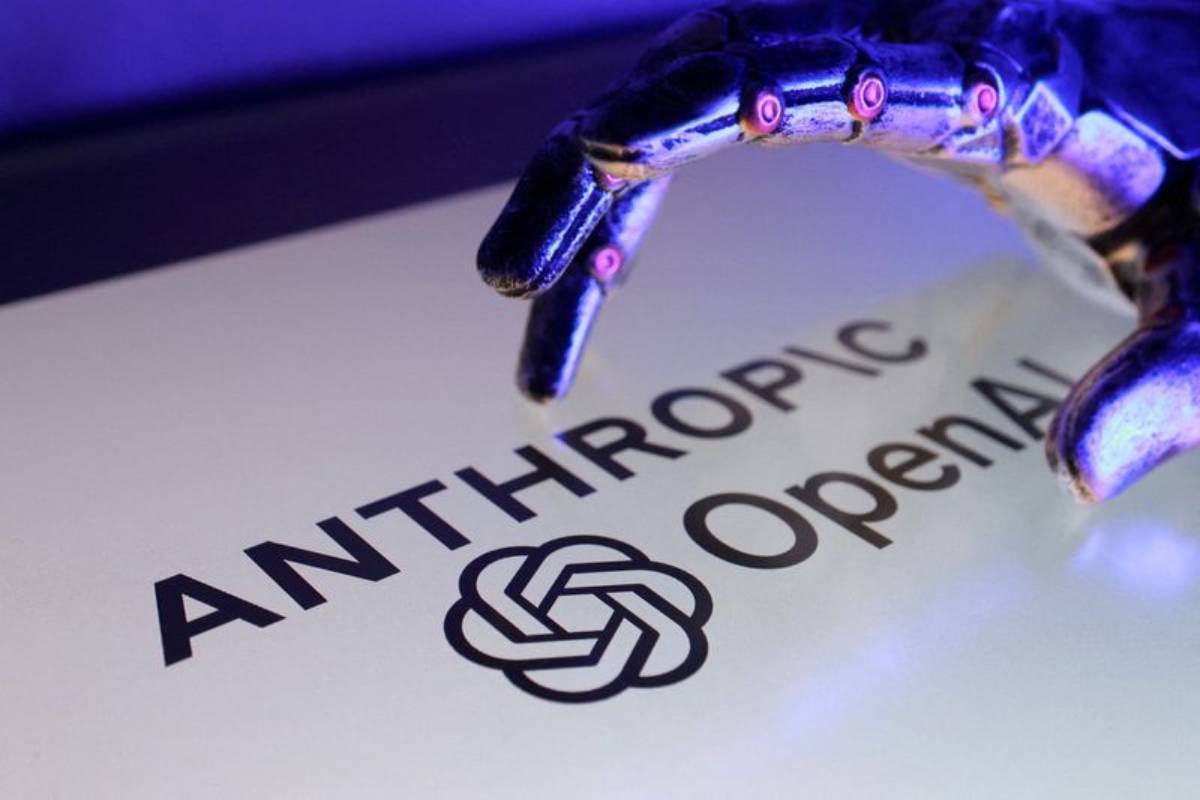
A major development unfolded during the Super Bowl advertising blitz as AI startup Anthropic launched high-profile ads that indirectly criticised OpenAI’s move toward advertising-driven monetisation. The moment signals a deepening ideological and commercial rift in the AI sector, with implications for business models, user trust, and regulatory scrutiny.
Anthropic purchased premium Super Bowl advertising slots to promote its vision of “responsible AI,” positioning itself against competitors exploring ad-based revenue models. While not naming OpenAI directly, the messaging was widely interpreted as a critique of ChatGPT’s potential integration of advertising.
The move comes as OpenAI evaluates diversified revenue streams beyond subscriptions and enterprise licensing, amid soaring infrastructure costs. The Super Bowl campaign elevates what had been a quiet philosophical debate into a mainstream confrontation, drawing public attention to how AI platforms will ultimately pay for their rapid growth.
The development aligns with a broader trend across global markets where AI leaders are under pressure to reconcile ethics with economics. Generative AI models require immense capital investment in compute, data centres, and energy, forcing companies to seek scalable monetisation.
Historically, advertising has underpinned much of the consumer internet, but applying the model to conversational AI raises concerns over bias, data usage, and user manipulation. Anthropic has positioned itself as a safety-first alternative since its founding, while OpenAI has increasingly embraced commercial pragmatism as its user base has scaled into the hundreds of millions. The Super Bowl, as the world’s most expensive advertising stage, underscores how strategically high the stakes have become.
Industry analysts suggest Anthropic’s campaign is as much about brand differentiation as it is about ethics. By framing ad-free AI as a feature rather than a constraint, the company appeals to enterprise clients wary of reputational and compliance risks.
Market observers note that OpenAI’s exploration of ads reflects financial reality rather than ideological shift, as compute costs continue to outpace subscription revenues. Some experts argue that advertising does not inherently undermine AI integrity if governance is strong, while others warn it could distort outputs and erode trust. The contrasting narratives highlight a sector still defining its commercial identity in real time.
For businesses, the split signals divergent AI procurement choices ahead. Enterprises may increasingly choose platforms based not only on performance, but on monetisation transparency and data governance.
Investors will watch closely to see whether ad-free positioning translates into sustainable revenue growth for Anthropic, or whether advertising proves unavoidable at scale. For policymakers, the public nature of this debate could accelerate scrutiny around AI transparency, consumer protection, and the influence of commercial incentives on algorithmic outputs. The Super Bowl spotlight may force regulators to engage sooner than expected.
Looking ahead, the AI industry appears headed for a defining test of values versus viability. As costs rise and competition intensifies, pressure will mount on all players to justify their models. Decision-makers should watch for clearer signals on whether users reward ad-free ethics—or whether advertising becomes the default economic engine of consumer AI, despite the controversy.
Source: Reuters
Date: February 2026


