
AI Pilot Training Advances With Navi Platform

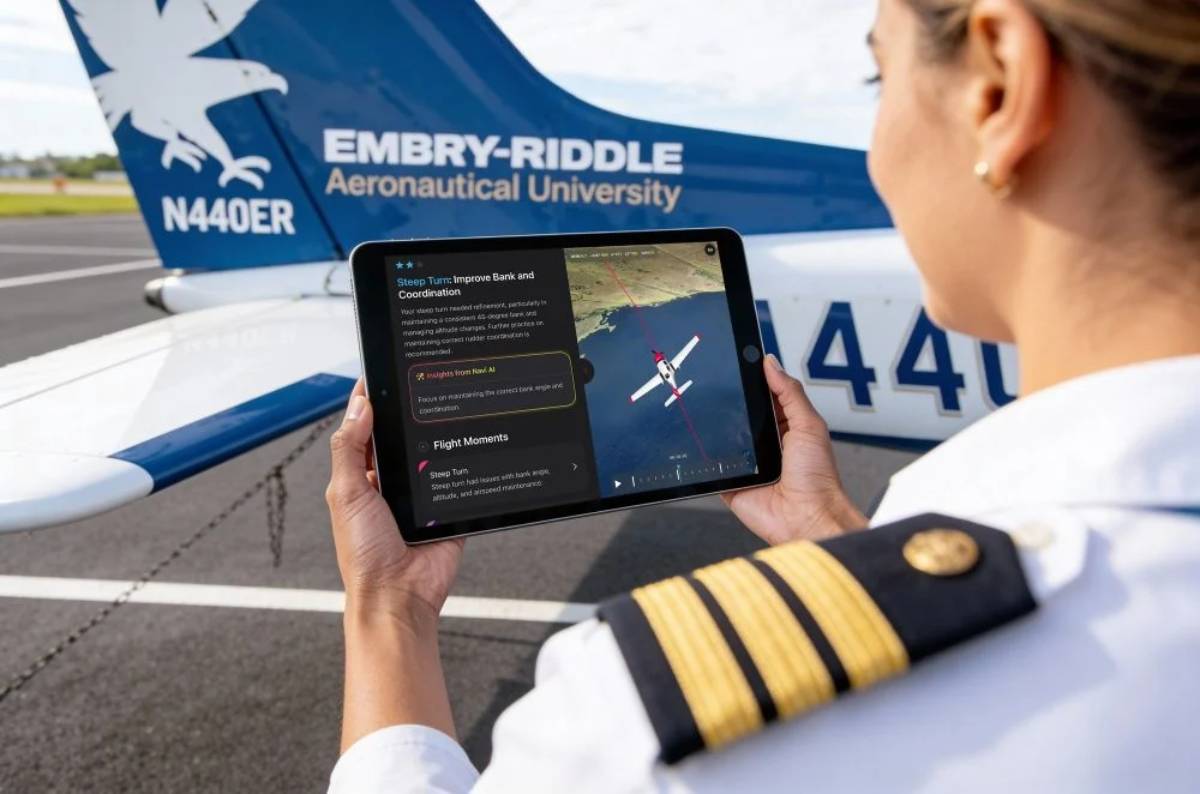
Navi has launched an AI-powered platform designed to enhance pilot training through automated debriefing and performance insights. The system analyzes flight data to provide detailed feedback on pilot actions, decision-making.

March 30, 2026
|
Image credit: Navi AI

A major development unfolded in aviation training as Navi introduced an AI-based debriefing platform for pilots. The initiative signals a shift toward data-driven training and performance analysis, with implications for aviation safety, operational efficiency, and the modernization of global pilot training systems.

Navi has launched an AI-powered platform designed to enhance pilot training through automated debriefing and performance insights. The system analyzes flight data to provide detailed feedback on pilot actions, decision-making, and adherence to procedures. By leveraging AI models, the platform aims to improve learning outcomes and reduce human error in training environments.

Key stakeholders include airlines, training institutions, regulators, and pilots. The deployment reflects a growing trend toward integrating advanced technologies into aviation training, enabling more precise and scalable evaluation methods while improving safety standards.

The development aligns with a broader trend across global markets where AI is transforming training and simulation across high-risk industries such as aviation, defense, and healthcare. Traditional pilot training has relied heavily on instructor-led debriefing, which can be subjective and resource-intensive.

AI-driven systems introduce a more standardized and data-centric approach, enabling consistent evaluation and personalized feedback. This shift is particularly important as the aviation industry faces increasing demand for skilled pilots amid global travel recovery and fleet expansion.

Historically, advancements in aviation safety have been closely tied to improvements in training and technology. The integration of AI platforms into training programs represents the next in this evolution, combining real-time data analysis with scalable learning solutions to enhance overall safety and efficiency.

Industry experts view AI-based debriefing as a significant advancement in pilot training methodologies. Analysts suggest that automated insights can complement human instructors, providing objective feedback and identifying patterns that may be missed during manual evaluations.

Aviation specialists emphasize that improving training accuracy directly impacts safety outcomes, making such technologies highly valuable. The ability to analyze large volumes of flight data enables deeper insights into pilot behavior and operational risks.

However, experts also highlight the importance of balancing AI-driven analysis with human judgment, particularly in complex scenarios requiring contextual understanding. The consensus indicates that AI will augment rather than replace traditional training methods, enhancing overall effectiveness.

For global executives in aviation, the adoption of AI-driven training platforms highlights opportunities to improve safety, reduce costs, and enhance operational efficiency. Airlines may increasingly invest in such technologies to meet regulatory requirements and maintain competitive standards.

Investors could view the integration of AI into aviation training as a growth area within the broader aerospace technology sector. From a policy perspective, regulators may need to update certification and training standards to accommodate AI-based systems. Ensuring accuracy, reliability, and accountability in AI-driven training will be critical as adoption expands across the industry.

Looking ahead, the success of AI-based debriefing platforms will depend on adoption rates, regulatory acceptance, and measurable improvements in training outcomes. Decision-makers should monitor technological advancements and integration with existing training systems.

As aviation continues to evolve, AI-driven training solutions are likely to play a central role in enhancing safety and efficiency, shaping the future of pilot development worldwide.

Source: Aviation Week
Date: March 22, 2026

  • Featured tools
Neuron AI
Free

Neuron AI is an AI-driven content optimization platform that helps creators produce SEO-friendly content by combining semantic SEO, competitor analysis, and AI-assisted writing workflows.

#
SEO
Learn more
Writesonic AI
Free

Writesonic AI is a versatile AI writing platform designed for marketers, entrepreneurs, and content creators. It helps users create blog posts, ad copies, product descriptions, social media posts, and more with ease. With advanced AI models and user-friendly tools, Writesonic streamlines content production and saves time for busy professionals.

#
Copywriting
Learn more

Learn more about future of AI

Join 80,000+ Ai enthusiast getting weekly updates on exciting AI tools.
Thank you! Your submission has been received!
Oops! Something went wrong while submitting the form.

AI Pilot Training Advances With Navi Platform

March 30, 2026

Navi has launched an AI-powered platform designed to enhance pilot training through automated debriefing and performance insights. The system analyzes flight data to provide detailed feedback on pilot actions, decision-making.

Image credit: Navi AI

A major development unfolded in aviation training as Navi introduced an AI-based debriefing platform for pilots. The initiative signals a shift toward data-driven training and performance analysis, with implications for aviation safety, operational efficiency, and the modernization of global pilot training systems.

Navi has launched an AI-powered platform designed to enhance pilot training through automated debriefing and performance insights. The system analyzes flight data to provide detailed feedback on pilot actions, decision-making, and adherence to procedures. By leveraging AI models, the platform aims to improve learning outcomes and reduce human error in training environments.

Key stakeholders include airlines, training institutions, regulators, and pilots. The deployment reflects a growing trend toward integrating advanced technologies into aviation training, enabling more precise and scalable evaluation methods while improving safety standards.

The development aligns with a broader trend across global markets where AI is transforming training and simulation across high-risk industries such as aviation, defense, and healthcare. Traditional pilot training has relied heavily on instructor-led debriefing, which can be subjective and resource-intensive.

AI-driven systems introduce a more standardized and data-centric approach, enabling consistent evaluation and personalized feedback. This shift is particularly important as the aviation industry faces increasing demand for skilled pilots amid global travel recovery and fleet expansion.

Historically, advancements in aviation safety have been closely tied to improvements in training and technology. The integration of AI platforms into training programs represents the next in this evolution, combining real-time data analysis with scalable learning solutions to enhance overall safety and efficiency.

Industry experts view AI-based debriefing as a significant advancement in pilot training methodologies. Analysts suggest that automated insights can complement human instructors, providing objective feedback and identifying patterns that may be missed during manual evaluations.

Aviation specialists emphasize that improving training accuracy directly impacts safety outcomes, making such technologies highly valuable. The ability to analyze large volumes of flight data enables deeper insights into pilot behavior and operational risks.

However, experts also highlight the importance of balancing AI-driven analysis with human judgment, particularly in complex scenarios requiring contextual understanding. The consensus indicates that AI will augment rather than replace traditional training methods, enhancing overall effectiveness.

For global executives in aviation, the adoption of AI-driven training platforms highlights opportunities to improve safety, reduce costs, and enhance operational efficiency. Airlines may increasingly invest in such technologies to meet regulatory requirements and maintain competitive standards.

Investors could view the integration of AI into aviation training as a growth area within the broader aerospace technology sector. From a policy perspective, regulators may need to update certification and training standards to accommodate AI-based systems. Ensuring accuracy, reliability, and accountability in AI-driven training will be critical as adoption expands across the industry.

Looking ahead, the success of AI-based debriefing platforms will depend on adoption rates, regulatory acceptance, and measurable improvements in training outcomes. Decision-makers should monitor technological advancements and integration with existing training systems.

As aviation continues to evolve, AI-driven training solutions are likely to play a central role in enhancing safety and efficiency, shaping the future of pilot development worldwide.

Source: Aviation Week
Date: March 22, 2026

Promote Your Tool

Copy Embed Code

Similar Blogs

April 10, 2026
|

Originality AI Detection Tools Drive Content Trust Pus

Originality.ai offers AI detection technology capable of analyzing text to determine whether it has been generated by artificial intelligence models.
Read more
April 10, 2026
|

A2e AI: Unrestricted AI Video Platforms Raise Governance Risks

A2E has launched an AI video generation platform that emphasizes minimal content restrictions, enabling users to create a wide range of synthetic videos.
Read more
April 10, 2026
|

ParakeetAI Interview Tools Gain Enterprise Traction

ParakeetAI offers an AI-powered interview assistant designed to support recruiters and hiring managers through automated candidate evaluation, interview insights, and real-time assistance.
Read more
April 10, 2026
|

Sovereign AI Race Sparks Trillion-Dollar Opportunity

The concept of sovereign AI where nations develop and control their own AI infrastructure, data, and models is gaining traction across major economies. Governments are increasingly investing in domestic AI capabilities to reduce reliance on foreign technology providers.
Read more
April 10, 2026
|

Sopra Steria Next Scales Enterprise GenAI Blueprint

Sopra Steria Next outlined a structured framework designed to help organizations move from pilot AI projects to enterprise-wide deployment. The blueprint emphasizes governance, data readiness, talent upskilling.
Read more
April 10, 2026
|

Cisco Boosts AI Governance with Galileo Deal

Cisco is set to acquire Galileo to enhance its capabilities in AI observability tools that monitor, evaluate, and improve the performance of AI models in production environments.
Read more