



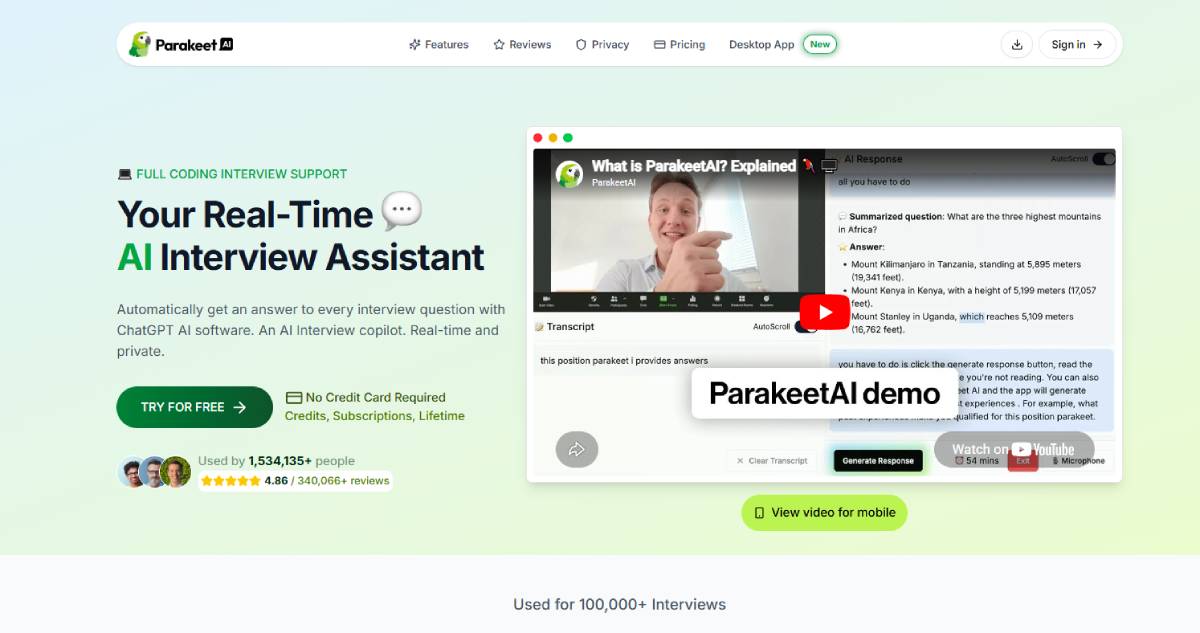
A major shift is unfolding in the global recruitment technology sector as ParakeetAI advances AI-driven interview assistance tools aimed at automating candidate evaluation and recruiter workflows. The development reflects accelerating enterprise demand for scalable hiring intelligence as companies worldwide confront rising talent competition, operational efficiency pressures, and growing adoption of generative AI across human resources functions
ParakeetAI is positioning itself within the rapidly expanding AI recruitment software market by offering interview assistance capabilities designed to support hiring teams through automated note-taking, candidate assessment, interview analytics, and workflow optimization.
The platform enters a competitive HR technology landscape where enterprises are increasingly investing in automation to reduce recruitment costs and improve hiring accuracy. Businesses across technology, consulting, financial services, and global outsourcing sectors are accelerating digital HR transformation initiatives amid persistent labor shortages and hybrid workforce expansion.
Industry analysts note that AI interview platforms are becoming strategically important as corporations seek faster recruitment cycles, data-driven hiring decisions, and standardized evaluation systems. The shift also coincides with broader enterprise investments in generative AI productivity tools following rapid advancements in large language model technologies over the past two years.
The rise of AI-powered interview assistants reflects a broader transformation underway across the global human capital management industry. Enterprises are increasingly integrating artificial intelligence into recruitment pipelines to address inefficiencies tied to manual screening, fragmented interview documentation, and inconsistent candidate evaluation processes.
The development aligns with wider market trends where AI is reshaping enterprise operations beyond traditional automation. HR technology providers worldwide are competing to deliver platforms capable of improving workforce analytics, reducing administrative overhead, and enhancing talent acquisition strategies. Since the post-pandemic acceleration of remote and hybrid work models, organizations have faced mounting pressure to streamline cross-border hiring and manage larger candidate volumes.
Major technology firms and startups alike have intensified investments in AI recruitment infrastructure, triggering concerns and policy discussions around hiring transparency, algorithmic bias, and regulatory oversight. Governments in North America, Europe, and parts of Asia are increasingly examining how automated decision-making tools are deployed in employment settings.
Against this backdrop, companies like ParakeetAI are entering a market where operational efficiency and compliance considerations are becoming equally critical for enterprise customers.
Industry observers say AI interview assistants are evolving from productivity tools into strategic enterprise intelligence systems. Recruitment analysts argue that organizations are no longer focused solely on automating repetitive HR tasks but are increasingly using AI to generate deeper insights into workforce quality, hiring trends, and candidate engagement patterns.
HR technology consultants indicate that platforms offering real-time transcription, structured interview analysis, and recruiter assistance may significantly reduce time-to-hire metrics for large enterprises. Analysts also suggest that demand for AI-enabled recruitment tools is likely to rise among multinational corporations managing high-volume hiring operations across multiple jurisdictions.
Corporate leaders across the technology sector have repeatedly emphasized that generative AI will become embedded within core enterprise software stacks, including human resource management systems. However, governance experts continue to warn that companies deploying AI hiring tools must establish safeguards to address privacy risks, data protection standards, and fairness concerns tied to algorithmic assessments.
While no major regulatory restrictions currently dominate the sector globally, policymakers are closely monitoring how AI systems influence hiring decisions, particularly in sensitive industries and public-sector recruitment.
For global executives, the expansion of AI interview assistance platforms could redefine recruitment operations across industries ranging from IT services to finance and healthcare. Businesses may increasingly prioritize AI-enabled hiring ecosystems capable of improving recruiter productivity while lowering operational expenditure.
Investors are also watching the HR technology sector closely as generative AI adoption drives new software spending cycles. Analysts believe enterprise demand for intelligent workforce platforms may create significant opportunities for both established SaaS providers and emerging AI startups.
At the policy level, regulators may intensify scrutiny around transparency, candidate consent, and algorithmic accountability. Companies deploying AI hiring systems could face growing pressure to demonstrate ethical AI governance practices and maintain compliance with evolving labor and data privacy regulations.
The next phase of competition in enterprise HR technology is expected to center on how effectively AI platforms integrate automation with compliance, analytics, and workforce intelligence. Decision-makers will closely monitor adoption rates, regulatory developments, and the ability of AI recruitment systems to deliver measurable hiring outcomes without compromising fairness or transparency.
As enterprises continue embedding generative AI into core business functions, recruitment automation is likely to remain one of the fastest-evolving segments within the broader global software economy.
Source: ParakeetAI Official Website
Date: May 27, 2026


