
AI Coding Race Led by Codex, Claude Clash

Reports from developers indicate that Codex has begun to surpass Claude in code generation, debugging accuracy, and multi-step software reasoning tasks.

May 25, 2026
|
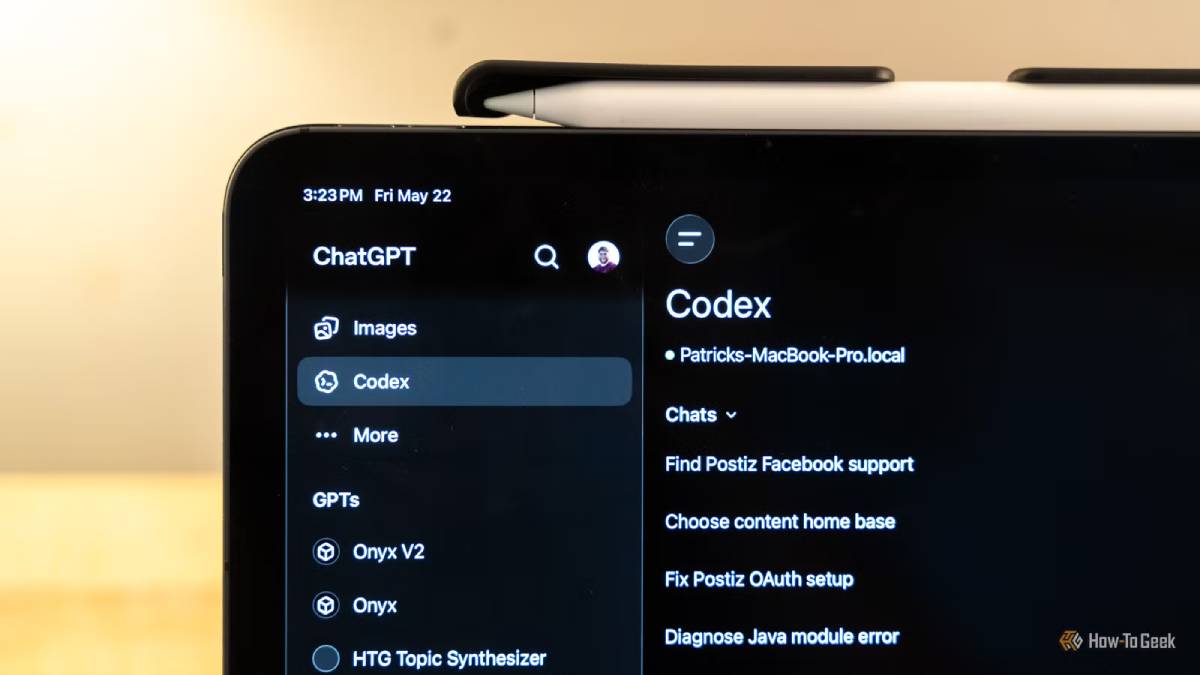
Image Source:  How-To Geek

The competitive landscape in AI-powered software development has shifted as recent developer experiences suggest OpenAI Codex is outperforming Claude in real-world programming tasks. The perceived leap in capability underscores a broader acceleration in AI-assisted engineering, with implications for developer productivity, enterprise software strategies, and the future structure of technical labor markets.

Reports from developers indicate that Codex has begun to surpass Claude in code generation, debugging accuracy, and multi-step software reasoning tasks. The shift is particularly visible in complex engineering workflows, where Codex demonstrates stronger contextual consistency and fewer hallucinated outputs.

The discussion originates from hands-on comparisons rather than formal benchmark releases, but has rapidly gained attention across developer communities. Engineers highlight improved performance in task automation, API integration, and repository-level reasoning.

While Claude remains widely respected for safety-oriented responses and structured reasoning, the narrative is increasingly framing Codex as the more execution-focused system for production-grade coding environments. This perceived gap is fueling renewed debate about specialization among frontier AI models.

The rivalry between leading AI coding systems reflects a broader evolution in generative AI, where models are increasingly optimized for domain-specific performance rather than general intelligence alone. Since the emergence of large language models, companies such as OpenAI, Anthropic, and Google have competed to dominate developer tooling, enterprise automation, and software engineering workflows.

AI-assisted coding has become one of the fastest-growing enterprise use cases, reducing time-to-deploy and reshaping how engineering teams operate. Tools like Codex represent a shift from suggestion-based assistants to agentic systems capable of executing multi-step development tasks.

At the same time, enterprises are under pressure to improve productivity amid global talent shortages in software engineering. This has made coding assistants strategic infrastructure rather than optional productivity tools. The growing divergence between models suggests a future where different AI systems specialize in distinct layers of the software development lifecycle.

Industry analysts suggest that Codex’s perceived advantage stems from tighter integration with execution environments and reinforcement learning tuned specifically for code generation tasks. Unlike general-purpose assistants, coding-first models are increasingly trained on structured repositories, testing frameworks, and iterative debugging loops.

Experts also note that Claude retains strengths in reasoning clarity, safety alignment, and long-form problem decomposition, making it valuable in regulated or high-risk environments. However, in fast-paced development cycles, execution speed and accuracy often outweigh interpretability.

Some engineers argue that the comparison is not strictly competitive but architectural, with Codex optimized for “doing” and Claude optimized for “thinking.” This distinction reflects a broader segmentation trend in AI markets, where foundation models are diverging into specialized enterprise roles rather than competing as single general-purpose systems.

For enterprises, the divergence between AI coding systems signals a need to rethink software development pipelines. Organizations may increasingly adopt multi-model strategies, using different AI systems for ideation, architecture design, and production-level coding.

Venture capital and enterprise software firms are likely to reassess valuation models as AI coding efficiency becomes a measurable productivity multiplier. Companies that integrate stronger coding agents could gain significant cost and speed advantages.

From a policy perspective, rising reliance on autonomous coding tools raises questions around accountability, security, and software provenance. Regulators may eventually scrutinize AI-generated code in critical infrastructure, particularly in finance, healthcare, and defense systems where errors can scale rapidly.

The AI coding race is expected to intensify as companies refine agentic capabilities and integrate deeper development workflows. Codex’s apparent lead may not remain static, as Anthropic and other competitors continue improving reasoning depth and tool integration.

Decision-makers should watch for enterprise adoption patterns, benchmark standardization, and emerging security frameworks for AI-generated code. The next phase of competition will likely be defined less by model intelligence and more by system-level integration and reliability in production environments.

Source: How-To Geek (developer commentary and analysis)
Date: May 25, 2026

  • Featured tools
Beautiful AI
Free

Beautiful AI is an AI-powered presentation platform that automates slide design and formatting, enabling users to create polished, on-brand presentations quickly.

#
Presentation
Learn more
Symphony Ayasdi AI
Free

SymphonyAI Sensa is an AI-powered surveillance and financial crime detection platform that surfaces hidden risk behavior through explainable, AI-driven analytics.

#
Finance
Learn more

Learn more about future of AI

Join 80,000+ Ai enthusiast getting weekly updates on exciting AI tools.
Thank you! Your submission has been received!
Oops! Something went wrong while submitting the form.

AI Coding Race Led by Codex, Claude Clash

May 25, 2026

Reports from developers indicate that Codex has begun to surpass Claude in code generation, debugging accuracy, and multi-step software reasoning tasks.

Image Source:  How-To Geek

The competitive landscape in AI-powered software development has shifted as recent developer experiences suggest OpenAI Codex is outperforming Claude in real-world programming tasks. The perceived leap in capability underscores a broader acceleration in AI-assisted engineering, with implications for developer productivity, enterprise software strategies, and the future structure of technical labor markets.

Reports from developers indicate that Codex has begun to surpass Claude in code generation, debugging accuracy, and multi-step software reasoning tasks. The shift is particularly visible in complex engineering workflows, where Codex demonstrates stronger contextual consistency and fewer hallucinated outputs.

The discussion originates from hands-on comparisons rather than formal benchmark releases, but has rapidly gained attention across developer communities. Engineers highlight improved performance in task automation, API integration, and repository-level reasoning.

While Claude remains widely respected for safety-oriented responses and structured reasoning, the narrative is increasingly framing Codex as the more execution-focused system for production-grade coding environments. This perceived gap is fueling renewed debate about specialization among frontier AI models.

The rivalry between leading AI coding systems reflects a broader evolution in generative AI, where models are increasingly optimized for domain-specific performance rather than general intelligence alone. Since the emergence of large language models, companies such as OpenAI, Anthropic, and Google have competed to dominate developer tooling, enterprise automation, and software engineering workflows.

AI-assisted coding has become one of the fastest-growing enterprise use cases, reducing time-to-deploy and reshaping how engineering teams operate. Tools like Codex represent a shift from suggestion-based assistants to agentic systems capable of executing multi-step development tasks.

At the same time, enterprises are under pressure to improve productivity amid global talent shortages in software engineering. This has made coding assistants strategic infrastructure rather than optional productivity tools. The growing divergence between models suggests a future where different AI systems specialize in distinct layers of the software development lifecycle.

Industry analysts suggest that Codex’s perceived advantage stems from tighter integration with execution environments and reinforcement learning tuned specifically for code generation tasks. Unlike general-purpose assistants, coding-first models are increasingly trained on structured repositories, testing frameworks, and iterative debugging loops.

Experts also note that Claude retains strengths in reasoning clarity, safety alignment, and long-form problem decomposition, making it valuable in regulated or high-risk environments. However, in fast-paced development cycles, execution speed and accuracy often outweigh interpretability.

Some engineers argue that the comparison is not strictly competitive but architectural, with Codex optimized for “doing” and Claude optimized for “thinking.” This distinction reflects a broader segmentation trend in AI markets, where foundation models are diverging into specialized enterprise roles rather than competing as single general-purpose systems.

For enterprises, the divergence between AI coding systems signals a need to rethink software development pipelines. Organizations may increasingly adopt multi-model strategies, using different AI systems for ideation, architecture design, and production-level coding.

Venture capital and enterprise software firms are likely to reassess valuation models as AI coding efficiency becomes a measurable productivity multiplier. Companies that integrate stronger coding agents could gain significant cost and speed advantages.

From a policy perspective, rising reliance on autonomous coding tools raises questions around accountability, security, and software provenance. Regulators may eventually scrutinize AI-generated code in critical infrastructure, particularly in finance, healthcare, and defense systems where errors can scale rapidly.

The AI coding race is expected to intensify as companies refine agentic capabilities and integrate deeper development workflows. Codex’s apparent lead may not remain static, as Anthropic and other competitors continue improving reasoning depth and tool integration.

Decision-makers should watch for enterprise adoption patterns, benchmark standardization, and emerging security frameworks for AI-generated code. The next phase of competition will likely be defined less by model intelligence and more by system-level integration and reliability in production environments.

Source: How-To Geek (developer commentary and analysis)
Date: May 25, 2026

Promote Your Tool

Copy Embed Code

Similar Blogs

June 23, 2026
|

Sokin Secures European Payments License

Sokin has acquired Norwegian fintech firm Settle in a transaction that provides access to a valuable Electronic Money Institution (EMI) license.
Read more
June 23, 2026
|

Twin Prime Bets Defence AI

Twin Prime has secured $10 million in fresh funding to expand its defence-focused AI systems, which prioritize sensor fusion, detection, and real-time environmental interpretation over generative or chatbot-based models.
Read more
June 23, 2026
|

Northzone Backs Physical AI Shift

Northzone has appointed a new partner to lead its physical AI investment strategy, marking a deliberate shift toward embodied intelligence—systems that interact directly with physical environments.
Read more
June 23, 2026
|

Switzerland Hosts Iran US Technical Talks

The upcoming technical-level discussions between Iranian and US representatives will focus on procedural and issue-specific frameworks rather than high-level political agreements.
Read more
June 23, 2026
|

Switzerland Extends Ukrainian Protection Status

Swiss federal authorities are reviewing the possibility of extending S protection status, which grants temporary residence rights and access to essential services for Ukrainian nationals fleeing the war.
Read more
June 23, 2026
|

Swiss FM Engages Iran Diplomacy

Swiss Foreign Minister Ignazio Cassis held formal discussions with Iran’s foreign minister, focusing on bilateral relations and broader regional security dynamics.
Read more