



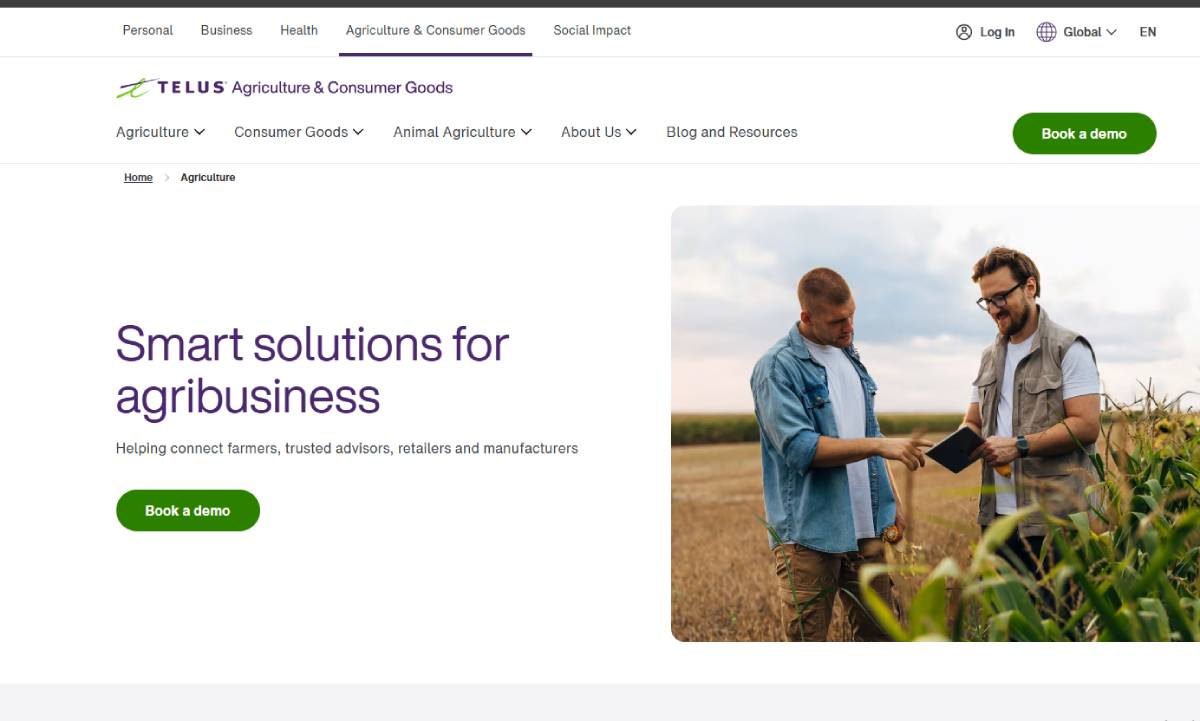
Agrian Inc. is positioned within the growing agricultural technology market, where digital platforms are helping producers, agronomists and agricultural businesses manage increasingly complex operations. Its technology-focused approach reflects the industry's broader move toward data-driven agriculture, supporting more informed decisions around crop management, compliance, inputs and operational efficiency.
Agrian Inc. operates within the agricultural technology ecosystem, providing digital tools aimed at helping agricultural stakeholders manage information and operational processes.
Its technology addresses areas where agricultural organizations increasingly depend on centralized data, including crop management, field activities, agricultural inputs and compliance-related information.
The growing use of digital platforms can help agricultural businesses replace fragmented records and manual processes with more structured information management. This can improve accessibility to operational data while supporting more consistent decision-making.
Key stakeholders include growers, agronomists, retailers, agricultural consultants and other organizations involved in crop production and management. The broader development reflects agriculture's continuing transition toward technology-enabled operations and data-driven resource management.
Agriculture is facing simultaneous pressures from changing climate conditions, resource constraints, labor challenges, regulatory requirements and the need to improve productivity. These pressures are accelerating interest in precision agriculture and digital tools capable of turning operational data into actionable information.
Modern agricultural businesses increasingly manage large volumes of information related to fields, crops, products, applications and compliance requirements. Without centralized systems, this information can become fragmented across spreadsheets, paper records and disconnected applications.
Agrian Inc. fits into a wider agricultural technology trend focused on improving how this information is captured, organized and used. Digital platforms can help stakeholders make decisions with greater visibility while reducing repetitive administrative tasks.
The economic significance is substantial because agricultural efficiency directly affects production costs, resource utilization and supply-chain resilience. For executives, agricultural technology is therefore becoming less about simple digitization and more about creating scalable information infrastructure for increasingly complex farming operations.
Agricultural technology analysts increasingly emphasize that data quality and accessibility are becoming critical competitive factors across modern farming operations. Digital systems can provide growers and agricultural professionals with a more consistent view of operational information, potentially supporting better planning and resource allocation.
From an agronomic perspective, centralized information can help professionals evaluate field conditions, crop activities and input-related decisions within a more structured workflow.
However, technology adoption also introduces challenges. Agricultural organizations must ensure that data is accurate, secure and accessible to the right stakeholders. Integration with existing farm-management systems can also determine whether a digital platform delivers meaningful operational value.
The broader industry perspective suggests that successful agricultural technology providers must balance sophisticated functionality with usability. Farmers and agricultural businesses often operate in demanding environments where technology must support practical decisions rather than add unnecessary administrative complexity.
Agrian's positioning reflects this broader transition toward connected, data-driven agricultural management. For agricultural businesses, digital management platforms can improve visibility across crop operations while reducing reliance on fragmented records. Better information management may support productivity, compliance and more efficient use of agricultural resources.
Agronomists and consultants can benefit from centralized information when advising growers and monitoring field-related activities. For agricultural policymakers, increased digitization creates opportunities for better data-driven oversight while also raising questions around data ownership, privacy and interoperability.
Executives evaluating agricultural technology should consider integration capabilities, data accuracy, usability, security and scalability. They should also assess whether a platform can support existing operational workflows rather than requiring costly process redesign.
As agriculture becomes more technology-driven, organizations that effectively combine agronomic expertise with reliable digital infrastructure could gain greater operational visibility and resilience.
Agricultural technology is likely to remain a strategic growth area as producers seek greater efficiency, sustainability and data-driven decision-making. Agrian Inc.'s future relevance will depend on its ability to support evolving agricultural workflows and integrate increasingly diverse data sources. Decision-makers should watch developments in precision agriculture, automation, regulatory technology and farm-data interoperability as digital infrastructure becomes increasingly central to modern agricultural management.
Source: Agrian Inc. / Serchen
Date: August 14, 2026


