
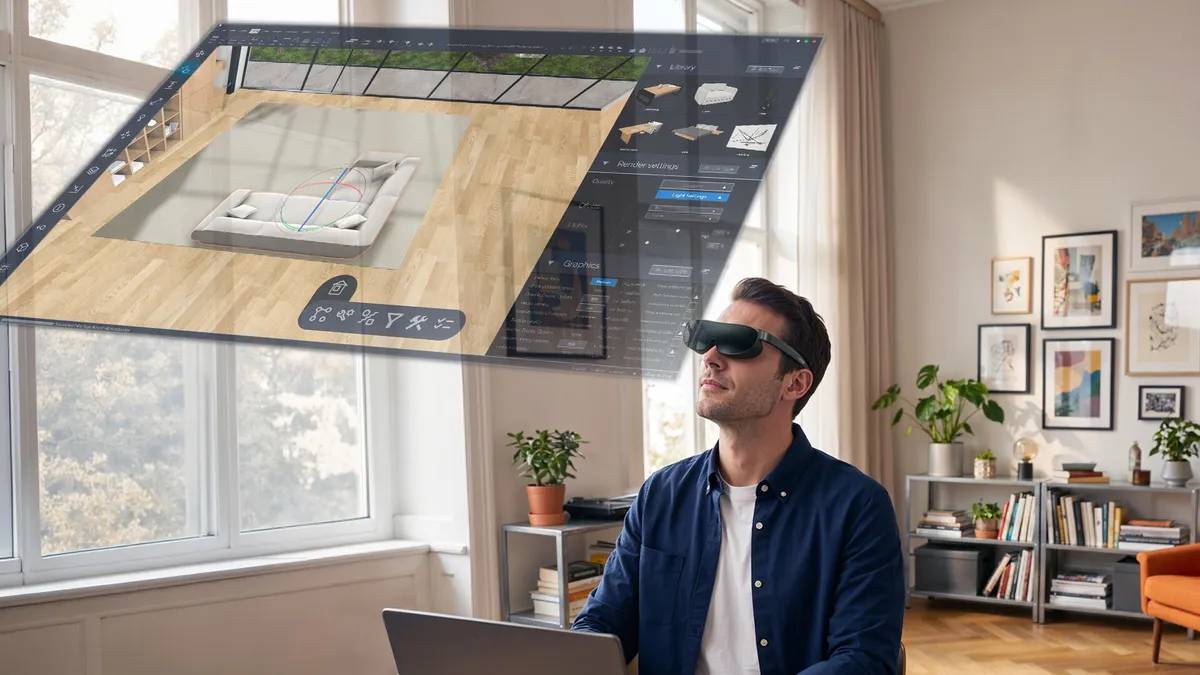
Acer Joins AI Smart Glasses Race

Acer has indicated its intent to develop smart glasses equipped with augmented reality features and integrated AI assistant capabilities, positioning the product as part of its broader expansion into AI-enabled hardware.

June 1, 2026
|
Image Source: CNET

A new wave of competition is emerging in the augmented reality wearables market as Acer signals its entry into smart glasses development powered by AI assistant integration. The move highlights intensifying rivalry in the next-generation wearable computing space, where technology firms are racing to define the future of hands-free digital interaction. The development carries implications for consumer electronics manufacturers, AI platform providers, and the broader augmented reality ecosystem.

Acer has indicated its intent to develop smart glasses equipped with augmented reality features and integrated AI assistant capabilities, positioning the product as part of its broader expansion into AI-enabled hardware.

The device concept is expected to combine real-time visual overlays, voice-based AI interaction, and contextual computing assistance designed for both productivity and consumer use cases. While detailed specifications remain limited, the product signals Acer’s strategic entry into a segment currently dominated by early movers in AR and wearable computing.

The announcement reflects a growing industry trend where traditional PC and hardware manufacturers are diversifying into AI-native devices beyond laptops and smartphones. The smart glasses market is increasingly being shaped by advancements in lightweight display technology, edge AI processing, and cloud-connected digital assistants.

The development aligns with a broader trend across global markets where wearable computing is evolving from experimental augmented reality devices into mainstream productivity and lifestyle tools. Over the past decade, companies have attempted to commercialize smart glasses with mixed success, often constrained by hardware limitations, battery life challenges, and user adoption barriers.

However, the rise of generative artificial intelligence and on-device AI processing has renewed interest in the category. AI assistants capable of real-time contextual understanding are now enabling more practical use cases, including navigation, translation, remote collaboration, and hands-free productivity workflows.

The competitive landscape includes major technology players investing heavily in spatial computing and immersive digital environments, with ecosystem control becoming a key strategic advantage.

Historically, shifts in computing paradigms from desktop to mobile, and now toward wearable and ambient computing have been driven by improvements in hardware miniaturization and software intelligence integration.

Industry analysts suggest that Acer’s move reflects a broader attempt by legacy hardware manufacturers to reposition themselves within the AI-driven computing ecosystem. As margins in traditional PC markets face pressure, companies are seeking higher-growth opportunities in emerging device categories.

Technology strategists note that smart glasses represent a convergence point between augmented reality, AI assistants, and mobile computing, potentially creating a new interface layer for digital interaction. Market observers highlight that success in this category will depend heavily on ecosystem integration, particularly the ability to seamlessly connect hardware with AI platforms, cloud services, and developer tools.

Experts also caution that consumer adoption remains uncertain due to historical challenges around usability, aesthetics, and price sensitivity, even as AI capabilities improve the functional value proposition.

For global executives, Acer’s entry into the smart glasses segment underscores the increasing convergence between hardware manufacturing and AI-driven software ecosystems. Companies will need to align product development with AI platform compatibility and real-time computing demands. Investors may view the wearable AI segment as a high-growth but highly competitive frontier, where differentiation will depend on ecosystem strength rather than hardware alone.

For policymakers, the expansion of AI-enabled wearable devices raises questions around privacy, data collection, and real-time environmental sensing in public and private spaces. Consumers may benefit from more intuitive and hands-free computing experiences, but will also face increased concerns regarding data transparency and digital surveillance boundaries.

The smart glasses market is expected to accelerate as AI capabilities mature and hardware becomes more lightweight and affordable. Decision-makers should monitor ecosystem partnerships, developer adoption, and user experience breakthroughs. The central uncertainty remains whether smart glasses will achieve mass-market adoption or remain a niche productivity tool within specialized professional segments.

Source: CNET
Date:
2026

  • Featured tools
Tome AI
Free

Tome AI is an AI-powered storytelling and presentation tool designed to help users create compelling narratives and presentations quickly and efficiently. It leverages advanced AI technologies to generate content, images, and animations based on user input.

#
Presentation
#
Startup Tools
Learn more
Upscayl AI
Free

Upscayl AI is a free, open-source AI-powered tool that enhances and upscales images to higher resolutions. It transforms blurry or low-quality visuals into sharp, detailed versions with ease.

#
Productivity
Learn more

Learn more about future of AI

Join 80,000+ Ai enthusiast getting weekly updates on exciting AI tools.
Thank you! Your submission has been received!
Oops! Something went wrong while submitting the form.

Acer Joins AI Smart Glasses Race

June 1, 2026

Acer has indicated its intent to develop smart glasses equipped with augmented reality features and integrated AI assistant capabilities, positioning the product as part of its broader expansion into AI-enabled hardware.

Image Source: CNET

A new wave of competition is emerging in the augmented reality wearables market as Acer signals its entry into smart glasses development powered by AI assistant integration. The move highlights intensifying rivalry in the next-generation wearable computing space, where technology firms are racing to define the future of hands-free digital interaction. The development carries implications for consumer electronics manufacturers, AI platform providers, and the broader augmented reality ecosystem.

Acer has indicated its intent to develop smart glasses equipped with augmented reality features and integrated AI assistant capabilities, positioning the product as part of its broader expansion into AI-enabled hardware.

The device concept is expected to combine real-time visual overlays, voice-based AI interaction, and contextual computing assistance designed for both productivity and consumer use cases. While detailed specifications remain limited, the product signals Acer’s strategic entry into a segment currently dominated by early movers in AR and wearable computing.

The announcement reflects a growing industry trend where traditional PC and hardware manufacturers are diversifying into AI-native devices beyond laptops and smartphones. The smart glasses market is increasingly being shaped by advancements in lightweight display technology, edge AI processing, and cloud-connected digital assistants.

The development aligns with a broader trend across global markets where wearable computing is evolving from experimental augmented reality devices into mainstream productivity and lifestyle tools. Over the past decade, companies have attempted to commercialize smart glasses with mixed success, often constrained by hardware limitations, battery life challenges, and user adoption barriers.

However, the rise of generative artificial intelligence and on-device AI processing has renewed interest in the category. AI assistants capable of real-time contextual understanding are now enabling more practical use cases, including navigation, translation, remote collaboration, and hands-free productivity workflows.

The competitive landscape includes major technology players investing heavily in spatial computing and immersive digital environments, with ecosystem control becoming a key strategic advantage.

Historically, shifts in computing paradigms from desktop to mobile, and now toward wearable and ambient computing have been driven by improvements in hardware miniaturization and software intelligence integration.

Industry analysts suggest that Acer’s move reflects a broader attempt by legacy hardware manufacturers to reposition themselves within the AI-driven computing ecosystem. As margins in traditional PC markets face pressure, companies are seeking higher-growth opportunities in emerging device categories.

Technology strategists note that smart glasses represent a convergence point between augmented reality, AI assistants, and mobile computing, potentially creating a new interface layer for digital interaction. Market observers highlight that success in this category will depend heavily on ecosystem integration, particularly the ability to seamlessly connect hardware with AI platforms, cloud services, and developer tools.

Experts also caution that consumer adoption remains uncertain due to historical challenges around usability, aesthetics, and price sensitivity, even as AI capabilities improve the functional value proposition.

For global executives, Acer’s entry into the smart glasses segment underscores the increasing convergence between hardware manufacturing and AI-driven software ecosystems. Companies will need to align product development with AI platform compatibility and real-time computing demands. Investors may view the wearable AI segment as a high-growth but highly competitive frontier, where differentiation will depend on ecosystem strength rather than hardware alone.

For policymakers, the expansion of AI-enabled wearable devices raises questions around privacy, data collection, and real-time environmental sensing in public and private spaces. Consumers may benefit from more intuitive and hands-free computing experiences, but will also face increased concerns regarding data transparency and digital surveillance boundaries.

The smart glasses market is expected to accelerate as AI capabilities mature and hardware becomes more lightweight and affordable. Decision-makers should monitor ecosystem partnerships, developer adoption, and user experience breakthroughs. The central uncertainty remains whether smart glasses will achieve mass-market adoption or remain a niche productivity tool within specialized professional segments.

Source: CNET
Date:
2026

Promote Your Tool

Copy Embed Code

Similar Blogs

June 22, 2026
|

Switzerland Tests Digital Sovereignty Limits

The analysis examines Switzerland’s dependence on major global technology providers across cloud computing, productivity software, search infrastructure, and digital communications.
Read more
June 22, 2026
|

Switzerland Faces Larger Emissions Gap

The report indicates that Switzerland’s actual emissions gap defined as the difference between current emission levels and targeted climate reduction pathways may be significantly larger than previously disclosed in official assessments.
Read more
June 22, 2026
|

Switzerland AI Jobs Surge Amid Digital Demand

A new labor market analysis indicates a record level of AI-related job postings and employment growth in Switzerland. Demand spans roles in machine learning engineering, data science.
Read more
June 22, 2026
|

Global Leaders Scrutinize AI Risks

The Geneva counter-summit brought together policymakers, academics, and technology governance experts to evaluate the risks associated with rapidly advancing artificial intelligence systems.
Read more
June 22, 2026
|

AI Reliability Crisis Deepens Amid Errors

The KPMG report, intended to analyze the benefits and risks of artificial intelligence adoption, reportedly included factual inconsistencies attributed to AI-generated content.
Read more
June 22, 2026
|

Skene Raises €800K for Agents

Skene has raised €800,000 in pre-seed funding to advance its AI-driven “code-reading agents” designed to help software products automatically teach users how to use them.
Read more