
A16z Backs Endra Engineering Automation

Endra’s $50 million Series A round, led by Andreessen Horowitz, marks one of the largest early-stage investments in AI-driven engineering design tools in Europe.

June 24, 2026
|
Image Source: nordictech.news

A significant funding round has positioned Stockholm-based Endra at the center of next-generation industrial automation, as Andreessen Horowitz leads a $50 million Series A investment. The company aims to use AI to redesign plumbing and mechanical systems, signaling a broader shift toward software-defined infrastructure engineering across global construction and industrial design sectors.

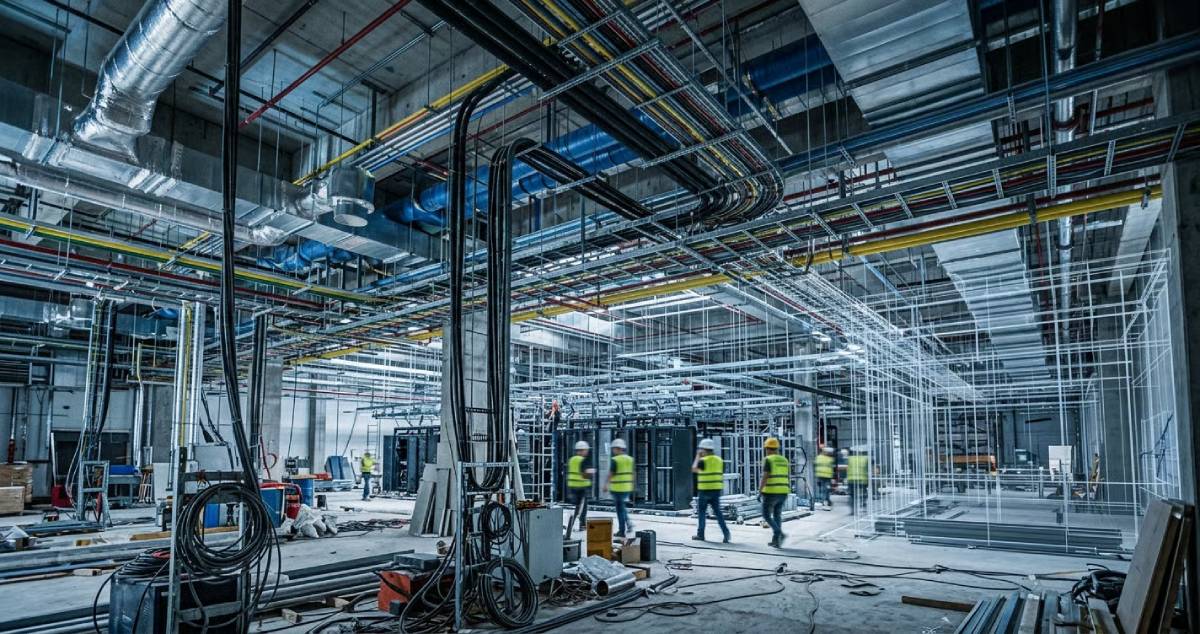
Endra’s $50 million Series A round, led by Andreessen Horowitz, marks one of the largest early-stage investments in AI-driven engineering design tools in Europe. The startup focuses on automating mechanical, electrical, and plumbing (MEP) system design using generative AI.

The platform is intended to reduce manual engineering workload, shorten design cycles, and improve cost efficiency in large-scale infrastructure projects. Investors see strong potential in applying AI to traditionally labor-intensive and fragmented construction workflows.

The funding will be used to expand engineering teams, enhance AI modeling capabilities, and scale deployment across construction firms and infrastructure developers in Europe and North America.

The construction and engineering design industry remains one of the least digitized sectors globally, despite representing trillions in annual infrastructure spending. Mechanical and plumbing system design, in particular, relies heavily on manual processes, legacy software, and fragmented workflows.

Endra’s approach reflects a broader wave of AI adoption in industrial verticals, where generative models are being applied beyond content creation into physical system design and optimization. This aligns with the growing trend of “AI for engineering,” where software increasingly acts as a co-designer rather than just a planning tool.

Europe’s strong industrial base and engineering expertise make it a key testing ground for such technologies. Meanwhile, venture capital interest in applied AI infrastructure tools has surged, particularly in sectors with high cost inefficiencies and predictable design constraints.

Industry observers suggest that Endra represents a shift in AI investment strategy from general-purpose models to domain-specific, high-impact applications. Investors are increasingly prioritizing startups that embed AI directly into industrial workflows rather than consumer-facing tools.

Engineering analysts note that automating MEP design could significantly reduce project timelines and lower costs in commercial real estate and infrastructure development. However, they caution that regulatory compliance, safety standards, and liability frameworks will remain key barriers to full automation.

While Andreessen Horowitz has not publicly detailed the full strategic thesis behind the investment, its backing signals continued conviction in applied AI infrastructure plays. Market experts view this as part of a broader pattern of capital flowing into “physical-world AI” applications across construction, logistics, and manufacturing.

For engineering firms, Endra’s technology could reshape cost structures, reducing reliance on large manual design teams and shifting toward AI-assisted workflows. This may accelerate project delivery timelines and improve margins in infrastructure-heavy sectors.

For investors, the deal highlights growing appetite for vertical AI startups focused on industrial transformation rather than software abstraction. The construction-tech segment may become a key frontier for AI-driven productivity gains.

From a policy standpoint, regulators and standards bodies will need to assess how AI-generated engineering designs comply with safety codes and liability frameworks. Governments may also need to update certification processes as AI becomes embedded in critical infrastructure planning.

The next phase of Endra’s growth will depend on real-world deployment in complex infrastructure projects and its ability to integrate with established engineering software ecosystems. If successful, it could redefine how buildings and industrial systems are designed globally. The broader industry will be watching whether AI can transition from drafting assistance to fully trusted design authority in safety-critical environments.

Source: nordictech.news
Date: June 24, 2026

  • Featured tools
Upscayl AI
Free

Upscayl AI is a free, open-source AI-powered tool that enhances and upscales images to higher resolutions. It transforms blurry or low-quality visuals into sharp, detailed versions with ease.

#
Productivity
Learn more
Tome AI
Free

Tome AI is an AI-powered storytelling and presentation tool designed to help users create compelling narratives and presentations quickly and efficiently. It leverages advanced AI technologies to generate content, images, and animations based on user input.

#
Presentation
#
Startup Tools
Learn more

Learn more about future of AI

Join 80,000+ Ai enthusiast getting weekly updates on exciting AI tools.
Thank you! Your submission has been received!
Oops! Something went wrong while submitting the form.

A16z Backs Endra Engineering Automation

June 24, 2026

Endra’s $50 million Series A round, led by Andreessen Horowitz, marks one of the largest early-stage investments in AI-driven engineering design tools in Europe.

Image Source: nordictech.news

A significant funding round has positioned Stockholm-based Endra at the center of next-generation industrial automation, as Andreessen Horowitz leads a $50 million Series A investment. The company aims to use AI to redesign plumbing and mechanical systems, signaling a broader shift toward software-defined infrastructure engineering across global construction and industrial design sectors.

Endra’s $50 million Series A round, led by Andreessen Horowitz, marks one of the largest early-stage investments in AI-driven engineering design tools in Europe. The startup focuses on automating mechanical, electrical, and plumbing (MEP) system design using generative AI.

The platform is intended to reduce manual engineering workload, shorten design cycles, and improve cost efficiency in large-scale infrastructure projects. Investors see strong potential in applying AI to traditionally labor-intensive and fragmented construction workflows.

The funding will be used to expand engineering teams, enhance AI modeling capabilities, and scale deployment across construction firms and infrastructure developers in Europe and North America.

The construction and engineering design industry remains one of the least digitized sectors globally, despite representing trillions in annual infrastructure spending. Mechanical and plumbing system design, in particular, relies heavily on manual processes, legacy software, and fragmented workflows.

Endra’s approach reflects a broader wave of AI adoption in industrial verticals, where generative models are being applied beyond content creation into physical system design and optimization. This aligns with the growing trend of “AI for engineering,” where software increasingly acts as a co-designer rather than just a planning tool.

Europe’s strong industrial base and engineering expertise make it a key testing ground for such technologies. Meanwhile, venture capital interest in applied AI infrastructure tools has surged, particularly in sectors with high cost inefficiencies and predictable design constraints.

Industry observers suggest that Endra represents a shift in AI investment strategy from general-purpose models to domain-specific, high-impact applications. Investors are increasingly prioritizing startups that embed AI directly into industrial workflows rather than consumer-facing tools.

Engineering analysts note that automating MEP design could significantly reduce project timelines and lower costs in commercial real estate and infrastructure development. However, they caution that regulatory compliance, safety standards, and liability frameworks will remain key barriers to full automation.

While Andreessen Horowitz has not publicly detailed the full strategic thesis behind the investment, its backing signals continued conviction in applied AI infrastructure plays. Market experts view this as part of a broader pattern of capital flowing into “physical-world AI” applications across construction, logistics, and manufacturing.

For engineering firms, Endra’s technology could reshape cost structures, reducing reliance on large manual design teams and shifting toward AI-assisted workflows. This may accelerate project delivery timelines and improve margins in infrastructure-heavy sectors.

For investors, the deal highlights growing appetite for vertical AI startups focused on industrial transformation rather than software abstraction. The construction-tech segment may become a key frontier for AI-driven productivity gains.

From a policy standpoint, regulators and standards bodies will need to assess how AI-generated engineering designs comply with safety codes and liability frameworks. Governments may also need to update certification processes as AI becomes embedded in critical infrastructure planning.

The next phase of Endra’s growth will depend on real-world deployment in complex infrastructure projects and its ability to integrate with established engineering software ecosystems. If successful, it could redefine how buildings and industrial systems are designed globally. The broader industry will be watching whether AI can transition from drafting assistance to fully trusted design authority in safety-critical environments.

Source: nordictech.news
Date: June 24, 2026

Promote Your Tool

Copy Embed Code

Similar Blogs

June 24, 2026
|

Denmark Launches €7M AI Lab

The Danish government has committed €7 million to establish a national AI Lab focused on accelerating real-world AI adoption.
Read more
June 24, 2026
|

Avrea Emerges With CI/CD Bet

Avrea has raised $4.7 million in pre-seed funding to modernize continuous integration and continuous deployment (CI/CD) systems for environments dominated by AI-generated code.
Read more
June 24, 2026
|

Atech Backs Lovable Hardware Moment

Atech is advocating a new approach to hardware development where AI tools streamline design, prototyping, and iteration cycles.
Read more
June 24, 2026
|

A16z Backs Endra Engineering Automation

Endra’s $50 million Series A round, led by Andreessen Horowitz, marks one of the largest early-stage investments in AI-driven engineering design tools in Europe.
Read more
June 24, 2026
|

Netcompany Expands Smart Airport Play

Netcompany’s acquisition of full control over Smarter Airports marks a strategic expansion into intelligent aviation infrastructure systems. The platform, integrated with AIRHART technology, is already being deployed at major hubs.
Read more
June 24, 2026
|

Swiss VC Market Enters Maturity Phase

The Swiss venture landscape is showing increased exit momentum through acquisitions and secondary sales, indicating healthier liquidity cycles for early-stage investors.
Read more