
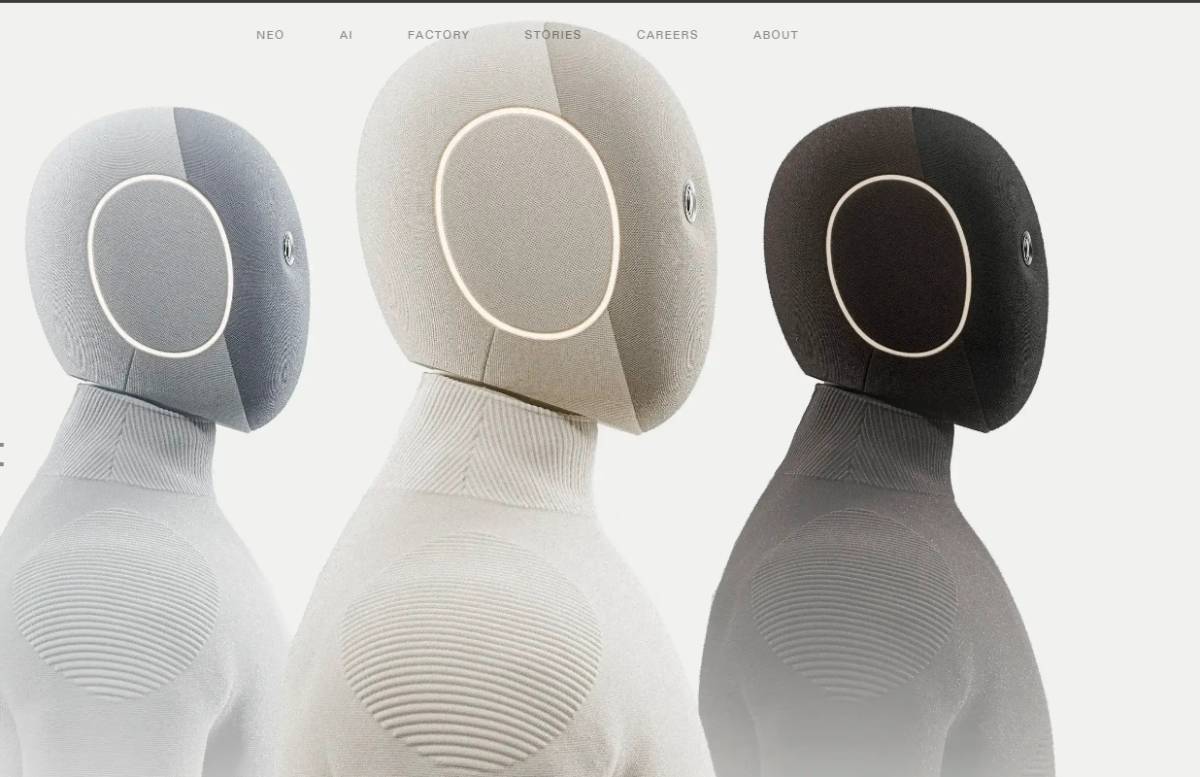
1X Launches AI Humanoid Robot Factory

Norwegian robotics company 1X has launched its first dedicated robot factory to scale production of its humanoid robot technology.

July 16, 2026
|

A major development unfolded in the global robotics industry as 1X opened its first robot manufacturing facility and quickly sold out its initial production capacity. The milestone highlights accelerating demand for humanoid robots and signals a strategic shift toward AI-powered physical automation across homes, businesses, and industrial environments.

Norwegian robotics company 1X has launched its first dedicated robot factory to scale production of its humanoid robot technology. The company’s initial batch reportedly sold out within five days, demonstrating strong market interest in next-generation AI robotics.

The factory represents a major step in moving humanoid robots from research environments into commercial deployment. 1X is focusing on developing robots capable of assisting with everyday tasks, workplace operations, and human-centric environments.

The expansion comes as technology companies globally increase investments in AI-powered robotics, competing to define the future of automation. The development aligns with a broader global trend where artificial intelligence is moving beyond software applications into the physical world. Companies across the United States, Europe, and Asia are investing heavily in humanoid robotics, driven by labour shortages, rising operational costs, and demand for automation.

Historically, industrial robots have been limited to structured manufacturing environments. However, advances in generative AI, computer vision, and machine learning are enabling robots to understand complex environments and interact more naturally with humans.

1X’s factory launch reflects a wider transition from experimental robotics toward scalable commercial products. As companies compete in the emerging humanoid robot market, manufacturing capability, AI performance, safety standards, and real-world usability are becoming critical competitive factors.

Industry analysts view humanoid robotics as one of the next major technology frontiers, comparable to the early growth stages of personal computing and mobile devices. Experts suggest that companies able to successfully combine advanced AI models with reliable hardware could reshape multiple industries.

1X has positioned its technology around creating safe, adaptable robots designed to work alongside humans rather than replace them entirely. The company’s rapid sell-out indicates growing confidence among customers and investors in practical AI robotics applications.

However, specialists also highlight challenges, including production costs, regulatory frameworks, safety concerns, and public acceptance. The success of humanoid robots will depend not only on technological breakthroughs but also on their ability to deliver measurable value in real-world environments.

For global businesses, the rise of humanoid robots could redefine workforce strategies, operational efficiency, and service delivery models. Companies in logistics, healthcare, manufacturing, retail, and hospitality may explore robotics solutions to improve productivity and address labour challenges.

Investors are closely monitoring robotics startups as AI-driven automation becomes a major growth opportunity. Governments and policymakers will also need to consider regulations covering robot safety, employment impacts, and ethical AI deployment.

For executives, the emergence of companies like 1X signals the importance of preparing for a future where intelligent machines become increasingly integrated into daily operations.

The next phase for 1X and the wider robotics industry will focus on scaling production, improving robot intelligence, and expanding real-world applications. Decision-makers should watch adoption rates, regulatory developments, and competition from major technology players entering humanoid robotics. As AI continues merging with physical systems, the companies that successfully bridge innovation and commercial deployment could shape the next generation of automation.

Source: Nordic Tech News
Date: April 30, 2026

  • Featured tools
Surfer AI
Free

Surfer AI is an AI-powered content creation assistant built into the Surfer SEO platform, designed to generate SEO-optimized articles from prompts, leveraging data from search results to inform tone, structure, and relevance.

#
SEO
Learn more
Tome AI
Free

Tome AI is an AI-powered storytelling and presentation tool designed to help users create compelling narratives and presentations quickly and efficiently. It leverages advanced AI technologies to generate content, images, and animations based on user input.

#
Presentation
#
Startup Tools
Learn more

Learn more about future of AI

Join 80,000+ Ai enthusiast getting weekly updates on exciting AI tools.
Thank you! Your submission has been received!
Oops! Something went wrong while submitting the form.

1X Launches AI Humanoid Robot Factory

July 16, 2026

Norwegian robotics company 1X has launched its first dedicated robot factory to scale production of its humanoid robot technology.

A major development unfolded in the global robotics industry as 1X opened its first robot manufacturing facility and quickly sold out its initial production capacity. The milestone highlights accelerating demand for humanoid robots and signals a strategic shift toward AI-powered physical automation across homes, businesses, and industrial environments.

Norwegian robotics company 1X has launched its first dedicated robot factory to scale production of its humanoid robot technology. The company’s initial batch reportedly sold out within five days, demonstrating strong market interest in next-generation AI robotics.

The factory represents a major step in moving humanoid robots from research environments into commercial deployment. 1X is focusing on developing robots capable of assisting with everyday tasks, workplace operations, and human-centric environments.

The expansion comes as technology companies globally increase investments in AI-powered robotics, competing to define the future of automation. The development aligns with a broader global trend where artificial intelligence is moving beyond software applications into the physical world. Companies across the United States, Europe, and Asia are investing heavily in humanoid robotics, driven by labour shortages, rising operational costs, and demand for automation.

Historically, industrial robots have been limited to structured manufacturing environments. However, advances in generative AI, computer vision, and machine learning are enabling robots to understand complex environments and interact more naturally with humans.

1X’s factory launch reflects a wider transition from experimental robotics toward scalable commercial products. As companies compete in the emerging humanoid robot market, manufacturing capability, AI performance, safety standards, and real-world usability are becoming critical competitive factors.

Industry analysts view humanoid robotics as one of the next major technology frontiers, comparable to the early growth stages of personal computing and mobile devices. Experts suggest that companies able to successfully combine advanced AI models with reliable hardware could reshape multiple industries.

1X has positioned its technology around creating safe, adaptable robots designed to work alongside humans rather than replace them entirely. The company’s rapid sell-out indicates growing confidence among customers and investors in practical AI robotics applications.

However, specialists also highlight challenges, including production costs, regulatory frameworks, safety concerns, and public acceptance. The success of humanoid robots will depend not only on technological breakthroughs but also on their ability to deliver measurable value in real-world environments.

For global businesses, the rise of humanoid robots could redefine workforce strategies, operational efficiency, and service delivery models. Companies in logistics, healthcare, manufacturing, retail, and hospitality may explore robotics solutions to improve productivity and address labour challenges.

Investors are closely monitoring robotics startups as AI-driven automation becomes a major growth opportunity. Governments and policymakers will also need to consider regulations covering robot safety, employment impacts, and ethical AI deployment.

For executives, the emergence of companies like 1X signals the importance of preparing for a future where intelligent machines become increasingly integrated into daily operations.

The next phase for 1X and the wider robotics industry will focus on scaling production, improving robot intelligence, and expanding real-world applications. Decision-makers should watch adoption rates, regulatory developments, and competition from major technology players entering humanoid robotics. As AI continues merging with physical systems, the companies that successfully bridge innovation and commercial deployment could shape the next generation of automation.

Source: Nordic Tech News
Date: April 30, 2026

Promote Your Tool

Copy Embed Code

Similar Blogs

July 16, 2026
|

Swiss Confidence Remains Future Strong

Swiss citizens continue to express a strong level of confidence about the country’s future, according to recent demographic and social research.
Read more
July 16, 2026
|

Crans Montana Case Takes New Turn

The latest development involves the decision by the 15th defendant in the Crans-Montana case to cooperate with Swiss authorities.
Read more
July 16, 2026
|

Pictet Raises $253M Investment Boost

Swiss private banking and asset management group Pictet has secured $253 million in capital for a new investment fund, strengthening its position in global investment markets.
Read more
July 16, 2026
|

Swiss Startup Funding Faces Investor Shift

Investment activity in Swiss start-ups has slowed, reflecting broader challenges affecting venture capital markets worldwide.
Read more
July 16, 2026
|

Monta Expands EV Charging Network

Danish EV charging software company Monta has acquired ABB’s Nordic charging contracts, expanding its customer base and strengthening its presence across Northern Europe.
Read more
July 16, 2026
|

Briox Acquires Selma for AI Automation

Briox has acquired Selma, an AI-powered sales agent company, in a transaction valued at SEK 35 million. The acquisition strengthens Briox’s focus on integrating artificial intelligence into its cloud-based business solutions.
Read more